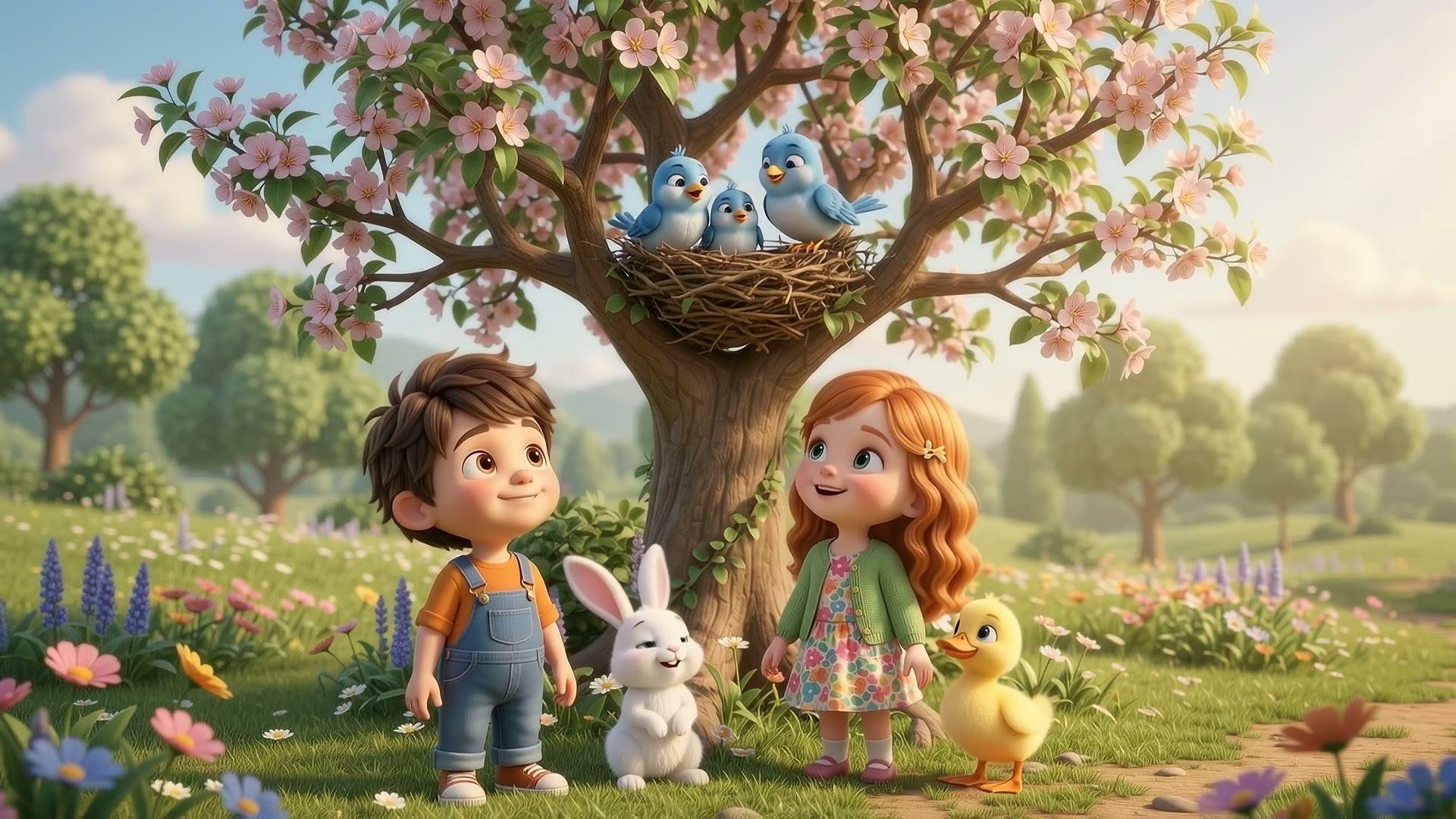
Teaching Kindness Through Animal Stories
Why gentle animal characters are such powerful teachers of empathy — and simple ways to turn any story into a conversation about caring for others.
By The Rainbow Trail Team · · 2 min read

Ask a five-year-old how a lost little bird might feel, and you’ll often get an answer straight from the heart: “Sad. It wants its mommy.” Young children may find it hard to talk about their own big feelings, but they often find it surprisingly easy to recognize feelings in an animal friend.
That’s one reason animal stories have been part of childhood for generations. A small, friendly creature gives children a safe bit of distance — the feelings are real, but they belong to someone else, which makes them easier to explore.
Why animal characters work so well
- They’re relatable without being personal. A shy butterfly or a worried fox cub mirrors feelings children know, without putting them on the spot.
- Their needs are simple and visible. Lost, hungry, stuck, lonely — young children can easily understand what an animal needs.
- Helping feels achievable. Comforting a small animal is a kind act children can imagine themselves doing.
Turning a story into a kindness conversation
You don’t need a lesson plan. A few gentle questions after a story are enough to help children practice empathy:
- Name the feeling. “How do you think the little songbird felt when she couldn’t find her family?”
- Notice the helper. “Who helped? What did they do?”
- Connect it to real life. “Have you ever felt lost or worried? What helped you?”
- Imagine kindness. “If you met someone who felt like that, what could you do?”
Kindness is shown, not told
Children learn kindness most from what they see. Stories work best when characters show caring — sitting quietly beside a nervous friend, taking a slow breath together, listening carefully. In The Lost Little Songbird, Ben and Sophie don’t rush to fix things; they first imagine how the bird feels. That small pause is a powerful thing for children to see.
You can echo these moments in everyday life: “You noticed your friend was sad — that was kind,” or “Puppy was very gentle, just like you were with the cat.”
Keep it light
Not every story needs a debrief. Sometimes children just want to enjoy it, and that’s perfectly fine. A single question at bath time or on the walk to the park can be more meaningful than a long talk straight after the credits.
Kindness grows best in small, everyday moments — a story, a question, a gentle example.